

signs of problem gambling Key Takeaways
Problem gambling is a behavioral addiction that can creep up gradually, often masked by the belief that a big win is just around the corner.
- Key warning signs include chasing losses, lying about gambling, and gambling with money you cannot afford to lose.
- Seeking help early — ideally before financial or relationship damage becomes severe — dramatically improves the chances of recovery.
- Free and confidential support is available through helplines, counseling, and self-exclusion programs across the U.S.
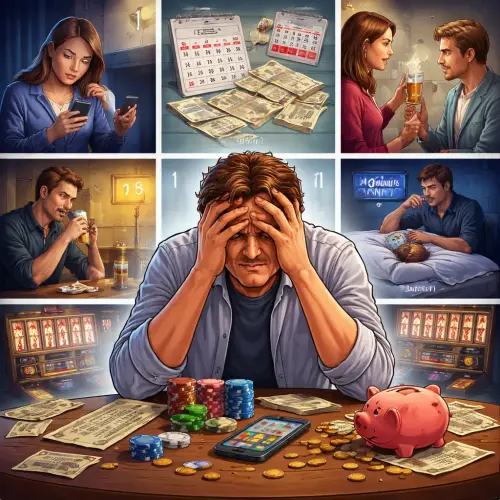
What Are the Early Signs of Problem Gambling?
Problem gambling, also known as gambling disorder or gambling addiction, is a progressive condition that affects judgment, finances, and relationships. Unlike recreational gambling, which remains a controlled pastime, problem gambling compels a person to keep betting despite negative consequences. The behavior changes from an occasional thrill to an urgent need that disrupts daily life.
Understanding the gambling addiction symptoms helps you spot trouble in yourself or someone you care about. Below are the seven most common warning signs, each explained with real-world context.
1. Preoccupation With Gambling
A person with a gambling problem often thinks about gambling constantly — planning the next session, reliving past wins, or figuring out how to get more money to bet. This mental obsession can interfere with work, school, and family time. For example, an otherwise focused employee may repeatedly check sports odds during meetings or rush through dinner to place bets.
2. Chasing Losses
One of the most telling problem gambling signs is the urge to immediately bet more after a loss in an attempt to win back the money. This dangerous cycle leads to increasingly larger bets and deeper losses. A typical scenario: someone loses $200 on a football game, then doubles down on the next game to recoup the loss, only to lose again.
3. Lying About Gambling Habits
Secrecy and deception are common. A person may hide receipts, lie about where they’ve been, or downplay how much money and time they spend gambling. Partners often discover the truth only when bank statements reveal large withdrawals or credit card bills go unpaid.
4. Gambling With Money You Cannot Afford to Lose
Using funds meant for rent, groceries, bills, or savings is a major red flag. When gambling money takes priority over essential living expenses, the behavior has crossed into dangerous territory. This sign often overlaps with borrowing money from friends, family, or payday lenders to keep gambling.
5. Restlessness or Irritability When Trying to Cut Back
Many people with a gambling addiction want to stop but find it extremely difficult. Attempts to cut down or quit often lead to withdrawal symptoms such as agitation, anxiety, depression, or anger. This emotional volatility can strain relationships and signal a need for outside help.
6. Using Gambling to Escape Emotional Pain
Gambling becomes a crutch for coping with stress, depression, loneliness, or boredom. Instead of addressing the underlying issue, a person turns to betting as a temporary emotional escape. Over time, the gambling itself becomes a new source of stress, creating a destructive feedback loop.
7. Jeopardizing Relationships or Career Opportunities
The behavior escalates to the point where it damages important parts of life. Missed work deadlines, unfulfilled promises to family members, or legal trouble from unpaid debts or theft are clear indicators that gambling has become a serious problem.
When to Seek Help for Gambling: Recognizing the Breaking Point
Knowing when to seek help for gambling is just as important as identifying the warning signs. Many people wait until they hit rock bottom — after a major financial loss, a divorce, or a criminal charge. However, earlier intervention leads to better outcomes. The following criteria can help you decide if it’s time to reach out for professional support.
Financial Warning Signs That Demand Action
- Maxed-out credit cards or new loans taken specifically to fund gambling
- Borrowing money from lenders, friends, or family to gamble or pay gambling debts
- Missing rent, mortgage, or utility payments because of gambling losses
- Selling personal belongings or using retirement savings to gamble
Emotional and Behavioral Warning Signs
- Feeling guilty or ashamed after gambling, but unable to stop
- Losing interest in hobbies, social events, or time with loved ones
- Lying about your whereabouts or the amount of money lost
- Thinking about gambling constantly, even when you want to focus on other things
Relationship Warning Signs
- Arguments with a partner or family members about money or time spent gambling
- Hiding bank statements or receipts from household members
- Missing important family events or work commitments to gamble
If you recognize even a few of these patterns, it’s time to have an honest conversation with a professional. Delaying help often makes the gambling addiction symptoms worse and recovery harder.
How to Get Help for Gambling Addiction: A Step-by-Step Guide
Step 1: Acknowledge the Problem
The first and hardest step is admitting that gambling is no longer a harmless hobby. This requires honesty with yourself and, ideally, with one trusted person. Denial is a powerful force, but breaking the silence opens the door to healing.
Step 2: Contact a Professional Helpline
The National Problem Gambling Helpline (1-800-522-4700) offers free, confidential support 24/7. Trained specialists can listen, provide immediate guidance, and connect you with local resources. This is often the safest and fastest way to start. For a related guide, see National Council On Problem Gambling Support Services: NCPG.
Step 3: Seek Therapy or Counseling
Cognitive-behavioral therapy (CBT) is one of the most effective treatments for gambling addiction. A licensed therapist can help you identify triggers, develop coping strategies, and address underlying issues like anxiety or depression. Many states offer low-cost or sliding-scale counseling for problem gamblers.
Step 4: Consider Self-Exclusion Programs
Self-exclusion programs allow you to voluntarily ban yourself from casinos, online gambling sites, or sportsbooks. Most states have a formal list, and violating the ban can result in trespassing charges or forfeited winnings. This is a powerful tool for breaking the cycle.
Step 5: Join a Support Group
Gamblers Anonymous (GA) offers free, peer-led meetings both in person and online. Sharing experiences with others who understand the struggle reduces isolation and builds accountability. Meetings follow a 12-step model similar to Alcoholics Anonymous.
Step 6: Protect Your Finances
Take practical steps to limit access to funds: give a trusted person control over your bank accounts, unlink credit cards from gambling sites, and set daily or weekly spending limits on remaining accounts. Financial counseling can also help you create a plan to manage debts.
Common Obstacles to Seeking Help — and How to Overcome Them
Many people delay getting help because of shame, fear of judgment, or the belief that they can handle it alone. These barriers are real but surmountable.
| Obstacle | How to Overcome It |
|---|---|
| Shame or embarrassment | Remember that addiction is a medical condition, not a moral failure. Helplines are confidential and nonjudgmental. |
| Fear of losing control | Realize that you have already lost control — seeking help is the first act of regaining it. |
| Belief that you can stop on your own | Gambling addiction alters brain chemistry. Professional support significantly increases your chances of success. |
| Financial concerns about therapy | Many states offer free or low-cost counseling. Helplines can connect you with affordable options. |
| Denial from family or friends | Bring a therapist or helpline worker into the conversation. A neutral third party can help everyone understand the severity. |
How to Support a Loved One Who Shows Problem Gambling Signs
Watching someone you care about struggle with gambling can be frustrating and heartbreaking. Your role is to support without enabling. Here’s how to approach the situation constructively.
Start a Conversation Without Accusation
Choose a calm moment and express your concern using “I” statements. For example: “I’ve noticed you seem stressed lately, and I’m worried about you.” Avoid blaming or shaming language, which often triggers defensiveness.
Offer Specific Observations
If you’ve noticed problem gambling signs like unpaid bills or secrecy, mention them factually. Stick to the behaviors you have seen, not assumptions about what they are feeling.
Encourage Professional Help — But Don’t Force It
You can’t make someone quit, but you can provide information about helplines, therapy, or support groups. Offer to accompany them to a first meeting or call the helpline together. Forcing an ultimatum usually backfires unless you are prepared to follow through with real consequences.
Optimizing Your Path to Recovery: Tips for Long-Term Success
Recovery from gambling addiction is an ongoing process, not a one-time event. The following strategies help maintain progress and prevent relapse.
- Build a support network — Attend GA meetings regularly, even when you feel strong.
- Identify and avoid triggers — If you gamble when bored, schedule alternative activities. If online ads tempt you, install site blockers.
- Practice financial transparency — Share your accounts with a trusted partner or family member for at least six months.
- Take care of your mental health — Therapy for underlying anxiety, depression, or trauma reduces the urge to gamble as a coping mechanism.
- Celebrate small wins — Each day you don’t gamble, each bill you pay on time, each honest conversation you have — these are milestones worth recognizing.
Remember that slips can happen. If you gamble again after a period of abstinence, do not give up. Reach out to your support network immediately and use the experience as a learning tool to strengthen your recovery plan.
Useful Resources
If you or someone you know is struggling with gambling, the following organizations provide free, confidential help: For a related guide, see National Council on Problem Gambling Services: 3 Smart Ways.
- National Council on Problem Gambling (NCPG) — Offers a national helpline, state-by-state resources, and self-exclusion program information.
- Gamblers Anonymous (GA) — A peer-led 12-step fellowship with meetings in cities across the U.S. and online.
Frequently Asked Questions About signs of problem gambling
What is the difference between problem gambling and recreational gambling?
Recreational gambling is a controlled, occasional activity with a set budget and no negative consequences. Problem gambling involves a loss of control, continued betting despite harm, and increasing financial or emotional costs.
Can someone have a gambling problem without losing a lot of money?
Yes. Even small losses can signal a problem if the behavior is compulsive, causes distress, or leads to lying and secrecy. The amount of money lost is not the sole indicator.
Are there physical symptoms of gambling addiction?
Yes, common physical symptoms include headaches, stomach issues, insomnia, fatigue, and a racing heartbeat during or after gambling. These arise from the stress and anxiety of the addiction.
How do I know if my spouse has a gambling problem?
Look for unexplained financial gaps, secrecy about spending, sudden mood changes, missing work, and an obsessive focus on sports scores or casino results. Honest conversation and checking bank statements may reveal the truth.
Is online gambling more addictive than in-person gambling?
Many experts believe online gambling can be more addictive because it is available 24/7, allows for rapid betting, and offers little social accountability. The anonymity also reduces the natural brakes that come with face-to-face interaction.
What is the first step to get help for gambling addiction?
The first step is recognizing that gambling is causing harm and reaching out for support. Calling the National Problem Gambling Helpline at 1-800-522-4700 is a safe, confidential way to start.
Can gambling addiction be treated without therapy?
Some people recover through peer support groups like Gamblers Anonymous alone, but therapy — especially cognitive-behavioral therapy — significantly improves the chances of long-term recovery.
How long does it take to recover from gambling addiction?
Recovery is a lifelong process. Many people see significant improvement within three to six months of active treatment, but maintaining abstinence requires ongoing effort and support.
Does self-exclusion really work?
Self-exclusion is an effective tool when combined with other forms of support. It creates a barrier that reduces impulsive gambling, but it works best alongside therapy, support groups, and financial management.
Is problem gambling more common in men or women?
Problem gambling affects both genders, but studies show men are more likely to develop the disorder. Women often start gambling later in life but progress to addiction more quickly. The gap has been narrowing in recent years.
Can gambling addiction cause depression?
Yes, the two conditions frequently co-occur. The financial losses, shame, and relationship strain from gambling often trigger or worsen depression. Treating both conditions simultaneously leads to the best outcomes.
What should I do if a family member refuses to acknowledge their gambling problem?
Express your concern calmly and without accusation. Offer to help them contact a helpline or attend a GA meeting. You cannot force recovery, but you can set boundaries to protect yourself, such as not lending money.
Are there medications approved for gambling addiction?
No medication is FDA-approved specifically for gambling disorder, but some antidepressants and opioid antagonists have shown promise in reducing gambling urges. Always consult a psychiatrist for prescription options.
How do problem gambling signs differ in older adults?
In older adults, gambling problems often go unnoticed because they may have fixed incomes and less family oversight. Signs can include selling possessions, neglecting medical bills, or spending excessive time at casinos or online slots.
Is it possible to gamble responsibly after having a gambling addiction?
Most treatment professionals advise complete abstinence. The nature of the addiction makes controlled gambling extremely difficult. Relapse rates are high among those who attempt to return to recreational gambling.
What are the legal consequences of problem gambling?
Legal consequences can include theft, fraud, embezzlement, or writing bad checks to fund gambling. These charges can lead to fines, probation, or even jail time, along with a permanent criminal record.
Can gambling addiction affect children in the family?
Yes, children may experience neglect, emotional distress, and financial instability. They are also at higher risk of developing gambling problems themselves later in life. Family therapy can help address these impacts.
How do I talk to my boss about a gambling problem?
If gambling has affected your work performance, consider speaking with a trusted supervisor or human resources representative. Many employers offer employee assistance programs (EAPs) that provide free, confidential counseling.
Are there online support groups for gambling addiction?
Yes, Gamblers Anonymous offers online meetings, and organizations like the NCPG provide virtual support groups. These are accessible from anywhere and offer anonymity for those who prefer not to attend in person.
What is the success rate of gambling addiction treatment?
Success rates vary, but studies show that about 30–50% of people who complete a treatment program achieve sustained abstinence. Combining therapy, support groups, and financial management significantly improves outcomes.