

Gibraltar and Isle of Man Licensing Key Takeaways
Choosing between Gibraltar and Isle of Man licensing models is one of the most critical decisions for any online gambling operator.
- Gibraltar and Isle of Man licensing both offer low corporate tax rates, but Gibraltar’s system is more streamlined for B2C operators while the Isle of Man is known for its flexible B2B licensing.
- Gibraltar imposes a fixed annual fee structure; the Isle of Man uses a tiered model based on revenue, which can be more cost-effective for smaller operators.
- Player protection and AML requirements are stricter in the Isle of Man, making it the preferred choice for operators targeting jurisdictions with high compliance expectations.
What Sets Gibraltar and Isle of Man Licensing Apart?
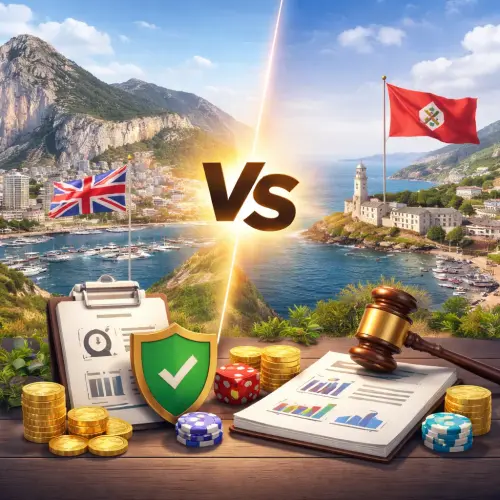
Both Gibraltar and the Isle of Man are British Crown Dependencies with a long history of regulating online gambling. However, their licensing philosophies have diverged over the past decade. Gibraltar has traditionally been the home of major sportsbooks and casino brands, while the Isle of Man has positioned itself as a hub for innovative eGaming startups and white-label solutions. For a related guide, see Gibraltar vs Isle of Man Licensing: 7 Key Differences to Know.
Understanding these differences is vital because your choice of jurisdiction affects not only your operational costs but also your ability to partner with payment processors, attract B2B clients, and comply with international tax treaties.
The Regulatory Bodies
Gibraltar’s gambling regulator is the Gibraltar Gambling Commissioner, a division of the HM Government of Gibraltar. The Isle of Man’s regulator is the Isle of Man Gambling Supervision Commission (GSC), which operates independently and is widely regarded as one of the most thorough regulatory bodies in the industry.
1. Cost and Fee Structures: Gibraltar Gambling License vs Isle of Man eGaming License
Cost is often the first factor operators consider when comparing Gibraltar and Isle of Man licensing. Here is a breakdown of the typical fees:
| Fee Type | Gibraltar | Isle of Man |
|---|---|---|
| Application fee | £20,000 | £5,000 (non-refundable) |
| Annual license fee (B2C) | £85,000 (fixed for most categories) | Tiered: £6,000–£40,000 (based on GGY) |
| Annual license fee (B2B) | £50,000 (fixed) | £20,000 (fixed) |
| Corporate tax | 0% on gambling profits for most operators | 0% on gambling profits (no withholding tax) |
| Additional compliance costs | Moderate (audit and AML reporting) | Higher (independent audit, regular reporting, player fund segregation audits) |
As the table shows, Gibraltar’s annual fees are higher and fixed, making it more suitable for larger, established operators. The Isle of Man’s tiered system is more accessible for startups and mid-sized businesses.
2. Speed of Licensing: Gambling License Comparison for Timelines
Another key differentiator in this Gambling license comparison is how quickly you can obtain a license.
- Gibraltar gambling license: The application process typically takes 8–12 months from submission to approval, assuming all required documentation is in order. The regulator conducts a rigorous due diligence review of shareholders, directors, and key employees.
- Isle of Man eGaming license: The GSC is known for a more streamlined process. Most applications are processed within 3–6 months for standard B2C licenses, though complex B2B setups may take longer.
If speed is critical, the Isle of Man offers a clear advantage. However, operators should note that the GSC’s fast processing does not mean less thorough scrutiny—it reflects a well-defined, pre‑vetted framework.
3. Market Access and Brand Reputation
Where you are licensed can open—or close—doors with payment providers, affiliate networks, and white-label partners. Both jurisdictions are well-regarded, but their reputational footprint differs.
Gibraltar’s Position
Gibraltar has historically been the home of tier‑1 global brands such as bet365, William Hill, and Ladbrokes. A Gibraltar gambling license carries enormous cachet in the sportsbook and casino verticals, especially when targeting the UK, Nordic, and German markets. For a related guide, see 5 Smart Steps to Evaluate an Online Casino’s Safety and Reputation.
Isle of Man’s Strengths
The Isle of Man is particularly strong in the B2B and eGaming platform space. Companies like Microgaming, Playtech, and Gamesys (now Games Global) operate from the island. An Isle of Man eGaming license is often a prerequisite for partnering with leading game studios and aggregation platforms.
The Gibraltar vs Isle of Man licensing decision here comes down to your target market: B2C operators aiming for major sportsbook players lean toward Gibraltar; B2B software and platform providers find the Isle of Man more accommodating.
4. Compliance and Player Protection Requirements
Both jurisdictions enforce strict anti‑money laundering (AML) and responsible gambling standards, but the Isle of Man sets the bar slightly higher in several areas.
Key Compliance Differences
- Player fund segregation: Both require separate accounts for player funds. However, the Isle of Man mandates that operators obtain an annual independent audit of these accounts, which increases compliance costs but provides stronger player protection.
- AML obligations: The Isle of Man requires operators to register with the Isle of Man Financial Services Authority for AML oversight, adding an extra layer of regulatory oversight. Gibraltar’s AML regime is robust but does not include this dual registration.
- Responsible gambling tools: Both jurisdictions require deposit limits, self‑exclusion, and time‑out features. The Isle of Man’s GSC publishes more detailed guidance on tool implementation and reviews operators’ social responsibility policies annually.
For operators targeting markets with high compliance expectations, such as Germany, the Netherlands, or Sweden, an Isle of Man license can be a selling point when demonstrating due diligence to foreign regulators.
5. Tax Regime and Long-Term Financial Implications
While both jurisdictions offer a 0% corporate tax rate on gambling profits, indirect taxes and operational overhead can affect your bottom line.
Gibraltar’s Tax Landscape
Gibraltar imposes a remote gambling duty of 1% on gross gaming revenue (GGY) for B2C operators, though many categories are exempt. There is also a social responsibility levy of 0.15% of GGY, capped at £200,000 per year.
Isle of Man’s Approach
The Isle of Man has no remote gambling duty. However, operators must pay a fixed annual fee to the GSC (included in the tiered license fee above) and contribute to the island’s general tax base through employer social security contributions (around 12% on salaries).
When evaluating long-term costs, consider your potential revenue scale. A large operator with £100 million GGY would pay approximately £1 million in Gibraltar’s remote gambling duty, while in the Isle of Man the same operator would pay only the fixed license fee (capped at £40,000) plus social security costs. Over a five‑year horizon, the Isle of Man can be significantly cheaper for high‑volume B2C operations.
Useful Resources
For the latest official fee schedules and application guidelines, visit the Gibraltar Gambling Division and the Isle of Man Government eGaming pages.
Frequently Asked Questions About Gibraltar and Isle of Man Licensing
Frequently Asked Questions About Gibraltar and Isle of Man Licensing
Which license is cheaper: Gibraltar or Isle of Man?
The Isle of Man is generally cheaper for small to mid‑sized operators due to its tiered fee structure. Gibraltar’s fixed annual fees are higher, making it more cost‑effective for large‑scale operations.
Can I hold both a Gibraltar and Isle of Man license?
Yes, there is no prohibition against holding licenses from both jurisdictions. Some multi‑brand operators do so to cover different market segments.
How long does it take to get a Gibraltar gambling license ?
Typically 8–12 months from submission, depending on the completeness of your application and the complexity of your shareholder structure.
How long does it take to get an Isle of Man eGaming license ?
Most B2C applications are processed within 3–6 months. B2B licenses may take 6–9 months if there are complex technical integrations.
Do both jurisdictions accept cryptocurrency as payment?
Gibraltar has a more permissive stance, allowing crypto for deposits and withdrawals under certain conditions. The Isle of Man requires operators to obtain separate approval from the GSC for cryptocurrency transactions.
Which license is better for sportsbook operators?
Gibraltar is traditionally stronger for sportsbook operators due to its reputation and established ecosystem of payment providers and odds feeds.
Which license is better for casino and slots?
The Isle of Man is preferred for casino and slots B2B operations, as many major game studios are based there and require an Isle of Man license from their partners.
Do I need a physical office in Gibraltar to get a license?
Yes, Gibraltar requires a physical presence with a registered office and at least one key person (e.g., compliance officer) based in Gibraltar.
Do I need a physical office in the Isle of Man?
Yes, you must have a physical office on the island. Remote operation without a local presence is not permitted.
Is there a withholding tax on dividends in either jurisdiction?
No, neither Gibraltar nor the Isle of Man imposes withholding tax on dividends paid to non‑resident shareholders.
Can I transfer an existing license from another jurisdiction to Gibraltar or the Isle of Man?
Yes, both jurisdictions allow license transfers, though you must go through a full application process. Some parts of the due diligence may be expedited if you already hold a comparable license.
Which jurisdiction has stricter AML requirements?
The Isle of Man has stricter AML requirements, including mandatory registration with the Isle of Man Financial Services Authority and annual independent audits of player fund segregation.
Do both jurisdictions accept US‑based operators?
Neither Gibraltar nor the Isle of Man licenses operators targeting the US market, as US federal law prohibits offshore gambling. Both require operators to exclude US players.
Can I use a Gibraltar or Isle of Man license to operate in the UK?
To target UK players, you must hold a UK Gambling Commission license. A Gibraltar or Isle of Man license does not grant access to the UK market.
What is the minimum age for players in both jurisdictions?
Both jurisdictions require players to be 18 years or older. Operators must verify age through identity checks.
Can I outsource customer support to a third party?
Yes, both allow outsourcing, but you remain fully responsible for compliance. The service provider must be disclosed to the regulator.
Is there a maximum stake limit under either license?
No, neither jurisdiction imposes a maximum stake limit on licensed operators, though responsible gambling tools must be offered.
How often are license renewals required?
Both require annual renewal. Fees are due each year before the anniversary of the initial license date.
Which license has better tax benefits for high‑revenue operators?
The Isle of Man is more tax‑efficient for high‑revenue operators because it has no remote gambling duty, while Gibraltar charges 1% on GGY.
Can I apply for a Gibraltar or Isle of Man license while living outside Europe?
Yes, both accept applications from non‑European residents. However, you must establish a physical presence (office and local staff) in the jurisdiction.