

Future of Online Gambling Regulation in Singapore Key Takeaways
Singapore maintains one of the strictest online gambling frameworks in the world, but rapid shifts in technology—from cryptocurrency betting to cross-border app usage—are testing the bounds of existing laws.
- The Future of Online Gambling Regulation in Singapore hinges on balancing public protection with technological realities like crypto payments and social casino apps.
- Current laws under the Gambling Control Act 2022 already empower authorities to block illegal sites and prosecute offenders, but enforcement gaps remain.
- Policymakers are exploring curated licensing models for premium operators while tightening penalties for unlicensed activities.

Why the Future of Online Gambling Regulation in Singapore Matters Now
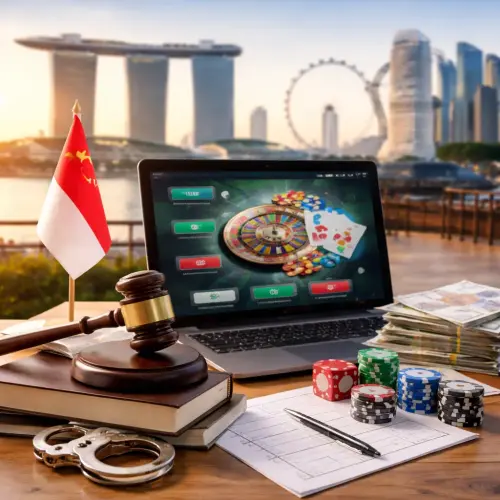
Singapore has long positioned itself as a global financial hub with a zero-tolerance stance toward illegal gambling. The future of online gambling regulation in Singapore is not just a legal curiosity—it directly affects how residents access betting platforms, how businesses operate within the city-state, and how authorities protect vulnerable groups from harm. As mobile penetration reaches 88% and cryptocurrency adoption grows, regulators face a delicate task: prevent harm without stifling innovation or driving the market further underground.
Current Legal Framework: The Foundation for Change
The Gambling Control Act 2022 and the Gambling Regulatory Authority of Singapore (GRA) form the backbone of online gambling regulation Singapore. The Act consolidates previous piecemeal legislation, covering all forms of gambling—land-based and digital. Key provisions include: For a related guide, see 5 Smart Steps to Evaluate an Online Casino’s Safety and Reputation.
- Blocking orders for unlicensed online gambling sites
- Financial transaction prohibitions for gambling-related payments
- Criminal penalties for operators and players caught violating the law
- Exemptions for Singapore Pools and the two integrated resorts (Marina Bay Sands and Resorts World Sentosa)
Despite this robust framework, regulators acknowledge that cross-border apps, peer-to-peer betting, and decentralised platforms pose unique challenges that existing laws were not designed to handle.
Emerging Trends Reshaping the Future of Online Gambling in Singapore
Several macro trends are accelerating the need for updated online gambling regulation Singapore approaches. Below is a snapshot of the most influential developments.
| Trend | Impact on Regulation | Example |
|---|---|---|
| Cryptocurrency gambling | Difficult to trace transactions; bypasses traditional banking blocks | Bitcoin-based sports betting platforms accessible via VPN |
| Mobile-first betting apps | Easy download from foreign app stores; harder to monitor | Social casino apps with real-money cash-outs |
| Live-streaming and e-sports betting | Blurs line between skill and chance; appeals to youth | Twitch channels hosting unlicensed betting links |
| Decentralised finance (DeFi) casinos | No central operator to regulate; smart contracts execute bets autonomously | Ethereum-based no-KYC gambling dApps |
Crypto and the Regulatory Blind Spot
Cryptocurrency offers anonymity and cross-border ease, making it a favoured payment method in unlicensed markets. Singaporean residents using Bitcoin or Ethereum to place bets on overseas platforms create enforcement difficulties because blockchain transactions are pseudonymous and irreversible. The future of online gambling regulation in Singapore will likely include clearer rules on digital asset usage in gambling contexts, possibly requiring licensed operators to accept only fiat currency or to implement crypto transaction reporting. For a related guide, see 4 Essential Warnings on Young People and Online Gambling.
Mobile Gambling: Convenience Meets Risk
With over 6 million smartphone users in Singapore, mobile gambling apps represent the most accessible pathway to unlicensed betting. Many apps masquerade as “social casinos” or “skill games” while offering cash-out features that bring them under the legal definition of gambling. Authorities are already issuing take-down notices to app stores, but the sheer volume of new apps makes eradication impractical.
Potential Regulatory Changes on the Horizon
Analysts and legal experts anticipate several reforms that will define the future of online gambling regulation in Singapore over the next three to five years.
Curated Licensing for Premium Operators
Rather than a blanket ban, some policymakers advocate a carefully controlled licensing regime for high-integrity operators—similar to the model used for the integrated resorts. A limited number of licences could be granted to operators that meet strict anti-money laundering (AML) standards, player protection protocols, and local tax obligations. This approach would generate government revenue while reducing the appeal of black-market sites.
Stronger Payment Blocking Mechanisms
Singapore already requires banks to block transactions to unlicensed gambling sites. Future regulations may expand this to include cryptocurrency exchanges and digital wallet providers, forcing them to implement automated screening for gambling-related addresses. This would represent a significant escalation in the online gambling regulation Singapore toolkit.
Mandatory Player Identity Verification for All Digital Platforms
Currently, some gambling-adjacent platforms operate without robust KYC (know your customer) checks. New rules could mandate identity verification for any site that offers betting-like mechanics, including fantasy sports and social casino apps. This would help authorities track real-money flows and intervene in cases of problem gambling.
Challenges and Opportunities in the Evolving Landscape
Every regulatory shift brings both obstacles and openings. Understanding these helps stakeholders prepare for the future of online gambling regulation in Singapore.
Key Challenges
- Enforcement across borders: Unlicensed operators often host servers abroad, making legal action slow and resource-intensive.
- Technological arms race: As blocking technology improves, so do VPNs and decentralised platforms that circumvent controls.
- Public education gaps: Many residents still do not recognise illegal gambling apps as dangerous, viewing them as harmless entertainment.
- Resource constraints: The Gambling Regulatory Authority must allocate staff and budget to monitor an expanding digital ecosystem.
Strategic Opportunities
- Revenue diversification: Licensing premium operators could bring new tax income without expanding the overall gambling market.
- Safer alternatives: A regulated market allows for consistent player protection tools such as deposit limits, time-outs, and self-exclusion databases.
- Regional leadership: Singapore could become a model for other Asian jurisdictions grappling with similar issues—exporting regulatory expertise and technology.
What Residents Should Do Now
While policymakers refine the future of online gambling regulation in Singapore, residents can take practical steps to protect themselves:
- Verify platform legality: Only use services from Singapore Pools, Marina Bay Sands, or Resorts World Sentosa for real-money betting.
- Avoid VPN-facilitated gambling: Using a VPN to access banned sites is illegal and exposes you to fraud and data theft.
- Recognise social casino risks: Apps that let you cash out winnings may be operating illegally—uninstall them and report them to the GRA.
- Monitor financial accounts: Be vigilant about unexplained transactions linked to gambling sites, even if you did not initiate them.
- Seek help early: If gambling is causing financial or emotional strain, contact the National Council on Problem Gambling helpline.
Useful Resources
For official guidance and deeper analysis, refer to these authoritative sources:
- Gambling Regulatory Authority of Singapore – Official Portal – The primary regulatory body overseeing all gambling activities in Singapore, including updates on enforcement and licensing.
- National Council on Problem Gambling – Helpline and Resources – Offers support services for individuals and families affected by problem gambling, including a 24-hour helpline and counselling referrals.
Frequently Asked Questions About Future of Online Gambling Regulation in Singapore
Is online gambling legal in Singapore?
Online gambling is largely illegal in Singapore except for select exempted operators—primarily Singapore Pools, Marina Bay Sands, and Resorts World Sentosa. Any other online gambling site is prohibited under the Gambling Control Act 2022.
What is the Gambling Control Act 2022?
The Gambling Control Act 2022 is Singapore’s central legislation that consolidates and updates all previous gambling laws. It covers land-based and online gambling, establishes the Gambling Regulatory Authority, and introduces stricter penalties for unlicensed operations.
Can I use cryptocurrency to gamble online in Singapore?
Using cryptocurrency for unlicensed online gambling is illegal. Even if the platform accepts crypto, the transaction is still considered a violation if the operator lacks a Singapore exemption. Authorities are working to extend payment blocking to crypto transactions.
Will Singapore ever legalise online casinos?
A full legalisation is unlikely in the short term, but a curated licensing model for premium operators is being discussed. This would allow a limited number of tightly regulated online platforms rather than an open market.
How does the government block illegal gambling sites?
The Gambling Regulatory Authority issues blocking orders to internet service providers (ISPs), requiring them to prevent access to listed domains. Banks are also instructed to block financial transactions to those sites.
What are the penalties for illegal online gambling in Singapore?
Penalties vary depending on the offence. Players can face fines up to SGD 10,000 and/or imprisonment for up to six months. Operators risk fines up to SGD 500,000 and imprisonment for up to seven years.
Are social casino apps legal in Singapore?
Social casino apps that allow real-money withdrawals or prizes that have monetary value may be considered illegal gambling. Pure free-to-play apps without cash-out features generally fall outside gambling laws.
Can I gamble on overseas sites using a VPN?
Using a VPN to access blocked gambling sites is illegal in Singapore. Both the act of circumventing blocks and the underlying gambling activity can lead to prosecution.
What is the role of the Gambling Regulatory Authority (GRA)?
The GRA is the sole regulator of all gambling activities in Singapore. It issues licences, enforces compliance, blocks illegal sites, and oversees player protection measures for exempted operators.
How does Singapore handle problem gambling online?
Exempted operators must implement responsible gambling tools such as deposit limits, self-exclusion, and time-out periods. The National Council on Problem Gambling also provides counselling and a 24-hour helpline.
Is sports betting legal online?
Only sports betting through Singapore Pools is legal. All other online sports betting platforms, whether local or offshore, are prohibited.
What about e-sports betting?
E-sports betting falls under the same legal framework as traditional sports betting. Only Singapore Pools offers some e-sports betting options; all other platforms are illegal.
Are fantasy sports platforms legal?
Paid-entry fantasy sports platforms that offer cash prizes are considered gambling and are illegal unless specifically exempted. Free-to-play fantasy leagues are generally permissible.
Do the laws apply to foreigners visiting Singapore?
Yes, the Gambling Control Act applies to anyone within Singapore’s territory, including tourists and foreign residents. Using unlicensed online gambling platforms while in the country is illegal.
Can I be charged if I only place small bets?
Yes, the law does not have a minimum threshold for prosecution. Even small bets on unlicensed platforms are considered illegal activities.
How do I report an illegal gambling site in Singapore?
You can report suspected illegal gambling sites to the Gambling Regulatory Authority via its official website or hotline. The GRA investigates all reports and takes enforcement action where warranted.
Will the government regulate cryptocurrency gambling in the future?
Regulators are actively studying cryptocurrency’s role in gambling. Future regulations may include specific requirements for crypto transaction reporting and extended payment blocking to exchanges.
What is the difference between online gambling and online gaming?
Online gambling involves wagering money or something of value on an outcome of chance or skill for a prize. Online gaming (e.g., video games) does not involve real-money stakes and is legal.
Are there any proposed changes to the law in the next year?
Industry insiders expect the GRA to introduce stricter AML requirements for exempted operators and possibly expand payment blocking to include digital assets. Formal consultation papers may be published within 12 to 18 months.
Where can I get help if I or someone I know has a gambling problem?
The National Council on Problem Gambling operates a 24-hour helpline at 1800-6-668-668. They offer confidential counselling, financial advice, and self-exclusion programs. Early intervention significantly improves outcomes.