


Cybersecurity Agencies Key Takeaways
Cybersecurity agencies worldwide—including CISA, NCSC, and ENISA—issue authoritative guidance to help individuals and organizations recognize and avoid online scams .
- Cybersecurity agencies like CISA, NCSC, and ENISA provide free, actionable resources to spot and stop online scams.
- Key warnings include unexpected contact, urgent requests, and suspicious attachments or links.
- Implementing multi-factor authentication and regular software updates are top recommendations across all agencies.
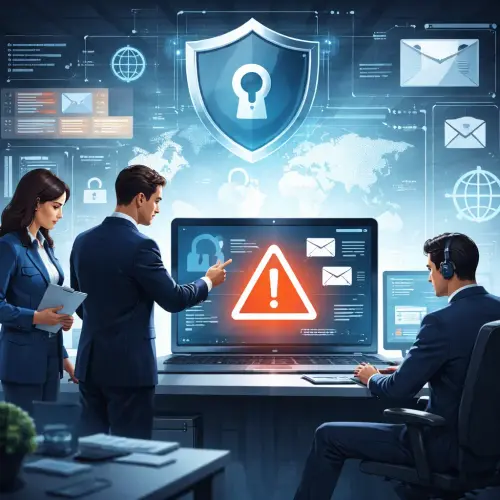
Why Cybersecurity Agencies Are Your First Line of Defense Against Online Scams
Online scams have grown more sophisticated every year, targeting both individuals and large organizations. Cybersecurity agencies at the national and international level analyze threat data, investigate attack patterns, and publish clear online scams guidance to help you stay safe. Understanding what these agencies say—and acting on it—can save you money, privacy, and peace of mind. For a related guide, see PAGCOR Licensing: 3 Critical Mistakes Online Operators Must Avoid.
Each agency tailors its advice for its region, but the core principles are universal: verify before you trust, use strong authentication, and report suspicious activity promptly. This article breaks down the 5 essential warnings shared by the three most influential cybersecurity agencies.
The 5 Essential Warnings From Cybersecurity Agencies to Avoid Online Scams
Warning 1: Unexpected Contact Is a Red Flag
CISA scam prevention guidelines stress that scammers often initiate contact via phone call, email, or text message without any prior relationship. If you receive an unsolicited message from a bank, government agency, or tech support, do not respond directly. Instead, visit the official website using a known URL or call the verified number.
The NCSC online safety team similarly warns that scammers impersonate trusted organizations to create a false sense of urgency. They may claim your account has been compromised or that you owe money. Always pause and verify through official channels before taking any action.
Warning 2: Scammers Create a False Sense of Urgency
According to ENISA scam advice, cybercriminals pressure victims to act quickly—often within minutes or hours. They might say your account will be closed, a payment is overdue, or a package is waiting. This tactic is designed to bypass critical thinking.
All three cybersecurity agencies recommend ignoring the urgency and taking time to verify. A legitimate organization will never demand immediate payment or sensitive information in a single phone call or email.
Warning 3: Suspicious Links and Attachments Are Dangerous
CISA scam prevention materials explicitly advise never clicking links or opening attachments in unsolicited messages. Even if the sender appears known, scammers can spoof email addresses or hack accounts. Hover over links (on desktop) to see the true destination before clicking.
The NCSC online safety guidance adds that common scam attachments include .zip files, .docm (with macros), and .pdfs containing malicious links. Organizations should implement email filtering and train employees to report suspicious messages without opening them.
Warning 4: Requests for Personal or Financial Information Are Scams
ENISA scam advice emphasizes that no legitimate company or government agency will ask for your password, PIN, credit card number, or social security number via email, text, or a phone call you did not initiate. If you receive such a request, it is almost certainly a scam.
Both CISA and the NCSC recommend using a password manager to generate and store strong, unique passwords. This reduces the impact if one account is compromised. Enable multi-factor authentication on all important accounts for an extra layer of protection.
Warning 5: Payment Methods That Are Hard to Trace Are a Red Flag
Scammers frequently ask for payment via gift cards, wire transfers, cryptocurrency, or prepaid debit cards. These methods are difficult to reverse or trace. Cybersecurity agencies across the globe advise never paying with these methods for services or products you have not ordered and received.
If someone demands payment in gift cards for taxes, fines, or technical support, it is a scam. Hang up and report the incident to the relevant cybersecurity agency in your country.
Comparing Guidance From Top Cybersecurity Agencies
Although each agency tailors its advice to its jurisdiction, the underlying principles are remarkably consistent. The table below summarizes the key areas of focus for the three leading cybersecurity agencies.
| Agency | Primary Focus Area | Key Resource | Best For |
|---|---|---|---|
| CISA (USA) | Phishing, ransomware, supply chain threats | CISA.gov/scams | Individuals and small businesses |
| NCSC (UK) | Cyber hygiene, social engineering, business fraud | NCSC.gov.uk/cyberaware | Organizations and employees |
| ENISA (EU) | Cross-border scams, data breaches, awareness campaigns | ENISA.europa.eu/topics | EU citizens and policymakers |
Practical Steps for Individuals and Organizations to Avoid Online Scams
For Individuals: Strengthen Your Digital Habits
Start by enabling multi-factor authentication on every account that offers it. Update your software and devices regularly—many scams exploit known vulnerabilities that updates would have patched. Use a password manager to create unique passwords for each login.
When in doubt about a message, contact the organization directly using a phone number or website you know is legitimate. Report any scam attempts to your local cybersecurity agency. In the US, that is CISA; in the UK, the NCSC; in the EU, you can report to ENISA or your national CSIRT.
For Organizations: Build a Culture of Security
Develop a clear policy for reporting suspicious emails and calls. Conduct regular phishing simulation exercises so employees learn to recognize red flags. Keep incident response plans updated and ensure staff know how to escalate potential breaches quickly.
Cybersecurity agencies offer free training materials and toolkits. For example, CISA scam prevention resources include webinars, infographics, and shareable guides. The NCSC online safety site has a business framework that outlines practical controls for fraud prevention.
Conclusion: Stay Vigilant and Use the Resources Cybersecurity Agencies Provide
Online scams will continue to evolve, but the core advice from cybersecurity agencies remains your best defense. By recognizing the 5 essential warnings—unexpected contact, false urgency, suspicious links, data requests, and untraceable payments—you can stop most scams before they cause harm. Make it a habit to verify who you are dealing with, think before you click, and report anything suspicious to the appropriate authority.
Bookmark the official websites of CISA, NCSC, and ENISA. Their online scams guidance is updated regularly to reflect the latest threats. Protecting your data is not a one-time task—it is an ongoing practice. Start today by sharing this article with colleagues, friends, and family who might also benefit from these warnings.
Useful Resources
Explore the official scam prevention portals from the three leading cybersecurity agencies:
- CISA Scam and Cybercrime Prevention — Detailed guidance for consumers and small businesses on recognizing and reporting fraud.
- NCSC Cyber Aware Campaign — Practical tips and tools from the UK’s National Cyber Security Centre to protect against online scams.
Frequently Asked Questions About Cybersecurity Agencies
What are cybersecurity agencies ?
Cybersecurity agencies are national or international organizations that protect information systems, analyze cyber threats, and issue guidance to the public and private sectors. Examples include CISA (US), NCSC (UK), and ENISA (EU).
How do I know if a message is from a real cybersecurity agency?
Legitimate cybersecurity agencies do not send unsolicited messages asking for personal information or payment. Always verify by visiting the agency’s official website directly, not by clicking links in the message.
What is the first thing I should do when I receive a suspicious email?
Do not click any links or open attachments. Report the message to your IT department (if at work) or forward it to the relevant cybersecurity agency (for example, reportphishing@apwg.org in the US). Then delete the email.
What is CISA scam prevention best known for?
CISA scam prevention is best known for its detailed alerts on phishing, ransomware, and business email compromise. CISA offers free awareness resources and a 24/7 reporting hotline.
How can NCSC online safety guidance help my small business?
The NCSC online safety site provides a Small Business Guide covering basic cyber security measures, including scam detection, backup procedures, and staff training. It is free and easy to follow.
What does ENISA scam advice cover?
ENISA scam advice covers a wide range of cross-border fraud schemes, including phishing, vishing, smishing, and e-commerce scams. It also provides annual threat landscape reports for EU member states.
Are there differences between CISA, NCSC, and ENISA recommendations?
The core recommendations are very similar: verify communications, use strong passwords, update software, and report scams. The main differences are in regional focus and the specific resources they offer to local citizens.
What is the most common scam reported to cybersecurity agencies ?
Phishing remains the most commonly reported scam globally. Scammers send deceptive emails or texts designed to steal login credentials, credit card numbers, or other sensitive data.
How can I report a scam to a cybersecurity agency ?
In the US, report to the FBI’s IC3 at ic3.gov or CISA via their online portal. In the UK, use the NCSC’s reporting tool. In the EU, contact your national CSIRT or use ENISA’s reporting page. Provide as much detail as possible.
Can cybersecurity agencies help me recover money lost to a scam?
Generally, cybersecurity agencies focus on investigation and prevention rather than direct financial recovery. They can provide guidance and may forward your case to law enforcement. Contact your bank immediately for possible transaction reversal.
Do cybersecurity agencies protect against phone scams?
Yes. CISA scam prevention and NCSC online safety include specific advice for vishing (voice phishing). They recommend blocking unknown callers, not sharing personal info by phone, and reporting scam calls to authorities.
What is the best tool to avoid phishing scams?
Multi-factor authentication is one of the most effective. Password managers and email filtering also help significantly. Cybersecurity agencies recommend using all three for comprehensive protection.
How often do cybersecurity agencies update their scam warnings?
Most cybersecurity agencies update warnings in real time as new scams emerge. You can subscribe to email alerts from CISA, NCSC, and ENISA to receive immediate notifications about active threats.
Is it safe to trust a message that has the official logo of a cybersecurity agency ?
No. Scammers can easily copy logos and branding. Verify the sender’s email domain and cross-check with the agency’s official website. Genuine cybersecurity agencies rarely send unsolicited advisory emails to the public.
What should I do if I clicked a scam link by mistake?
Disconnect from the internet immediately (disable Wi-Fi or unplug Ethernet). Run a full antivirus scan. Change passwords for any accounts that may have been exposed. Report the incident to your local cybersecurity agency.
How do cybersecurity agencies share online scams guidance with the public?
They use official websites, social media channels, email alerts, public service announcements, and partnerships with industry. Many also offer free webinars and downloadable posters for businesses.
Can cybersecurity agencies help me if I run a nonprofit?
Absolutely. Cybersecurity agencies provide resources for organizations of all sizes, including nonprofits. Check CISA’s free services for critical infrastructure and NCSC’s small charity guide.
What is the role of cybersecurity agencies during a widespread scam campaign?
They monitor the campaign, issue public alerts, coordinate with law enforcement, and work with internet service providers to take down fraudulent websites and domains. Their goal is to mitigate harm quickly. For a related guide, see Internet Service Providers and Access Blocking: 5 Essential Facts to Know.
Are the recommendations from cybersecurity agencies free?
Yes. All official guidance from CISA, NCSC, and ENISA is free and publicly available. You do not need to pay for a subscription or software to access their online scams guidance.
How can I stay updated on the latest scam advice?
Subscribe to email alert services from CISA, NCSC, and ENISA. Follow their official social media accounts. Set up Google Alerts for keywords like “CISA scam alert” to receive notifications in your inbox.