
social and family impact of problem gambling in Singapore Key Takeaways
Problem gambling in Singapore doesn’t happen in isolation—its social and family impact ripples far beyond the individual.
- The social and family impact of problem gambling in Singapore includes debt, marital breakdown, and emotional trauma for children.
- Early warning signs—such as secrecy about spending or borrowing money—are often missed until significant harm has occurred.
- Proven support channels like the National Problem Gambling Helpline and family therapy programmes can restore stability and rebuild trust.

Understanding the Social and Family Impact of Problem Gambling in Singapore
While Singapore positions itself as a global hub for entertainment, the presence of casinos and online betting platforms brings a hidden cost: problem gambling. This term describes a pattern of gambling that disrupts personal, family, and community life. The social impact of gambling extends to increased crime rates, workplace absenteeism, and strained public resources. For a related guide, see 7 Key Authorities Singapore Gambling Regulatory Framework.
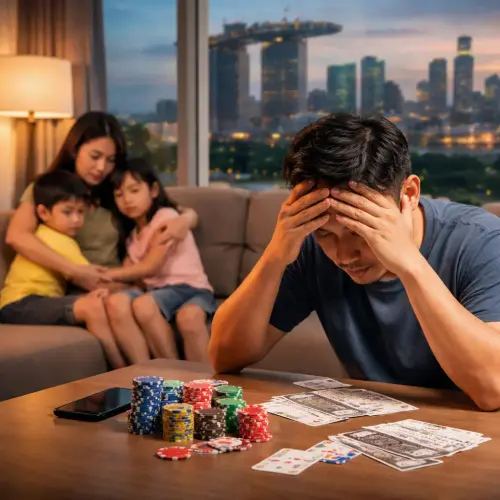
Yet it is within the home where the social and family impact of problem gambling in Singapore cuts deepest. A person who gambles excessively often prioritises betting over responsibilities, leading to a cascade of consequences that affect every family member. For a related guide, see 7 Warning Signs of Problem Gambling and When to Seek Help.
How Problem Gambling Erodes Family Bonds and Community Trust
Trust is the bedrock of any relationship. When someone loses money to gambling, they may lie about their whereabouts, borrow money under false pretences, or even steal from their own household. These actions fracture the emotional safety net.
Studies from the National Council on Problem Gambling (NCPG) indicate that spouses of people with family gambling problems report higher rates of depression, anxiety, and physical illness. Children often bear the brunt too, experiencing neglect, shame, and a disrupted home environment.
Financial Strain and Hidden Debt
The most visible consequence of problem gambling Singapore is financial ruin. Gamblers may take out multiple loans, max out credit cards, or pawn family valuables. In many cases, the non-gambling spouse discovers crushing debts only when creditors begin calling.
This financial stress forces families to cut back on basics—education, healthcare, and nutritious food—which can harm children’s long-term development.
Emotional Distress and Relationship Breakdown
Beyond money, the emotional toll is profound. Partners of problem gamblers feel betrayed, anxious, and exhausted. Arguments become more frequent, and intimacy often disappears. The social and family impact of problem gambling in Singapore includes a higher risk of divorce and separation, which itself compounds emotional harm for children.
Friends and extended family also feel the strain. When a loved one gambles destructively, they may repeatedly ask for bailouts, creating resentment and conflict within the wider social circle.
5 Family Risks Linked to Gambling Addiction and How to Address Them
Recognising these risks early can prevent long-term damage. Here are five common dangers and practical steps to reduce their impact.
Risk 1: Accumulation of Unmanageable Household Debt
The gambler often hides debts until it’s too late. To counter this, families should establish a shared budget and monitor joint accounts closely. Encourage open conversations about spending without judgment.
Risk 2: Mental Health Deterioration in Spouses and Children
Depression, anxiety, and even suicidal thoughts occur more frequently among family members of problem gamblers. Seek professional counselling early. Organisations like NCPG and the Institute of Mental Health (IMH) provide targeted support.
Risk 3: Normalisation of Dishonest Behaviour
When a parent lies about gambling, children may learn that dishonesty is acceptable. Model transparency. If mistakes happen, admit them and model repair.
Risk 4: Neglect of Parenting Responsibilities
Time and emotional energy diverted to gambling means less attention for children. Create a structured family schedule that prioritises shared activities, and limit access to gambling venues or platforms using self-exclusion tools.
Risk 5: Isolation from Social Support Networks
Shame often leads families to withdraw from friends, religious groups, and community activities. Rebuilding social connections—through support groups or family therapy—can break the cycle of isolation.
Prevention and Treatment Options for Gambling Addiction Help Singapore
Singapore offers a robust framework for gambling addiction help Singapore residents can access. The National Problem Gambling Helpline (1800-6-668-668) provides immediate, confidential advice. For those seeking structured recovery, NCPG’s network of counsellors and family therapists deliver evidence-based interventions. For a related guide, see National Council On Problem Gambling Support Services: NCPG.
Prevention is equally vital. The Ministry of Social and Family Development (MSF) enforces a strict exclusion order system. Anyone can voluntarily ban themselves from all casinos and remote gambling services. Families should also educate themselves on early signs of relapse, such as renewed secrecy or sudden changes in mood.
Practical Steps for Families
- Attend family counselling together, even if the gambler is reluctant.
- Set clear boundaries around financial support—no more bailouts.
- Use the NCPG self-assessment tool to evaluate gambling behaviour.
- Join a support group like GamCare Singapore or the NCPG Family Support Group.
Useful Resources
For further reading and immediate assistance, these Singapore-based organisations offer authoritative guidance:
- National Council on Problem Gambling (NCPG) – Official helpline, self-exclusion forms, and counselling services.
- Ministry of Social and Family Development (MSF) – Community Gambling – Policy information and public education resources.
Frequently Asked Questions About social and family impact of problem gambling in Singapore
What is considered problem gambling in Singapore?
Problem gambling is a pattern of betting behaviour that causes distress or harm to the individual, their family, or the community. It can involve casino games, online betting, or even lottery tickets when spending exceeds responsible limits.
How does problem gambling affect family relationships?
It often leads to broken trust, frequent arguments, secrecy, and financial betrayal. Spouses may feel abandoned, children may experience neglect, and extended family members can become resentful after repeated requests for money.
Can problem gambling lead to divorce?
Yes. Studies show a strong link between severe gambling problems and marital breakdown. The stress of hidden debt, lies, and emotional withdrawal makes it hard for many couples to stay together.
What are the early warning signs of a gambling problem?
Common signs include borrowing money for no clear reason, secretive behaviour around finances, mood swings after betting, neglecting work or family activities, and an inability to stop despite losses.
Is gambling addiction recognised as a mental health condition?
Yes. The World Health Organization (WHO) and the Diagnostic and Statistical Manual of Mental Disorders (DSM-5) classify gambling disorder as a recognised behavioural addiction.
How can I help a family member who gambles too much?
Offer non-judgmental support, encourage them to call the NCPG helpline, and attend family counselling. Set firm boundaries about not covering their debts, and protect your own finances by keeping separate accounts if needed.
What is the National Problem Gambling Helpline number?
The helpline is 1800-6-668-668. It is confidential, free, and available 24 hours a day for both the gambler and affected family members.
Does Singapore have a self-exclusion programme?
Yes. The Voluntary Self-Exclusion Scheme lets individuals ban themselves from all casinos in Singapore for at least a year. There is also a Family Exclusion Order that family members can apply for.
What financial help is available for families hit by gambling debt?
The Credit Counselling Singapore offers free financial coaching. NCPG also provides means-tested subsidies for counselling. However, the gambler must first commit to stopping the behaviour.
Can children be affected by a parent’s gambling?
Absolutely. Children may suffer from emotional neglect, heightened anxiety, shame about the family situation, and a greater risk of developing their own gambling problems later in life.
Are there support groups for family members in Singapore?
Yes. NCPG runs Family Support Groups, and community organisations like Hougang Community Club also host sessions. GamCare Singapore offers peer support for those affected by someone else’s gambling.
Is online gambling legal in Singapore?
Only regulated operators—Singapore Pools and Singapore Turf Club—are legal. All other online gambling platforms are banned, and accessing them is an offence.
How can I regain trust after my partner has gambled?
Transparency is key. Share all financial statements, agree on a budget, attend joint counselling, and demonstrate consistent behaviour over several months. Trust is rebuilt slowly through honesty.
What role do casinos play in Singapore’s problem gambling statistics?
What role do casinos play in Singapore’s problem gambling statistics is covered in the guide above with practical context, useful examples, and details readers can use to make a better decision.
Does problem gambling cause crime?
Yes. Financial desperation can lead to theft, fraud, or loan shark involvement. The social impact of gambling includes increased police cases related to gambling-related crime.
Can someone with problem gambling also have other addictions?
Often yes. Many problem gamblers also struggle with alcohol abuse, substance misuse, or compulsive spending. Integrated treatment at clinics like the Institute of Mental Health is recommended.
What are the long-term social effects of problem gambling?
Long-term effects include chronic poverty, family estrangement, decreased productivity, and a higher burden on social welfare systems. Communities with high gambling rates also see reduced social cohesion.
Is treatment effective for gambling addiction?
Yes, especially when the individual is motivated. Cognitive behavioural therapy, family counselling, and financial management training show strong success rates, particularly when combined with self-exclusion.
How can I talk to my parents about their gambling?
Choose a private, calm moment. Express concern using “I” statements, like “I worry about your financial safety.” Avoid blame. Suggest they speak to a counsellor, and offer to go with them.
Where can I find more information on the social impact of gambling in Singapore?
The NCPG website publishes annual reports and research. The MSF website also shares policy updates and public health campaigns on responsible gambling.